Two Weeks in Albania: From the Alps to the Riviera
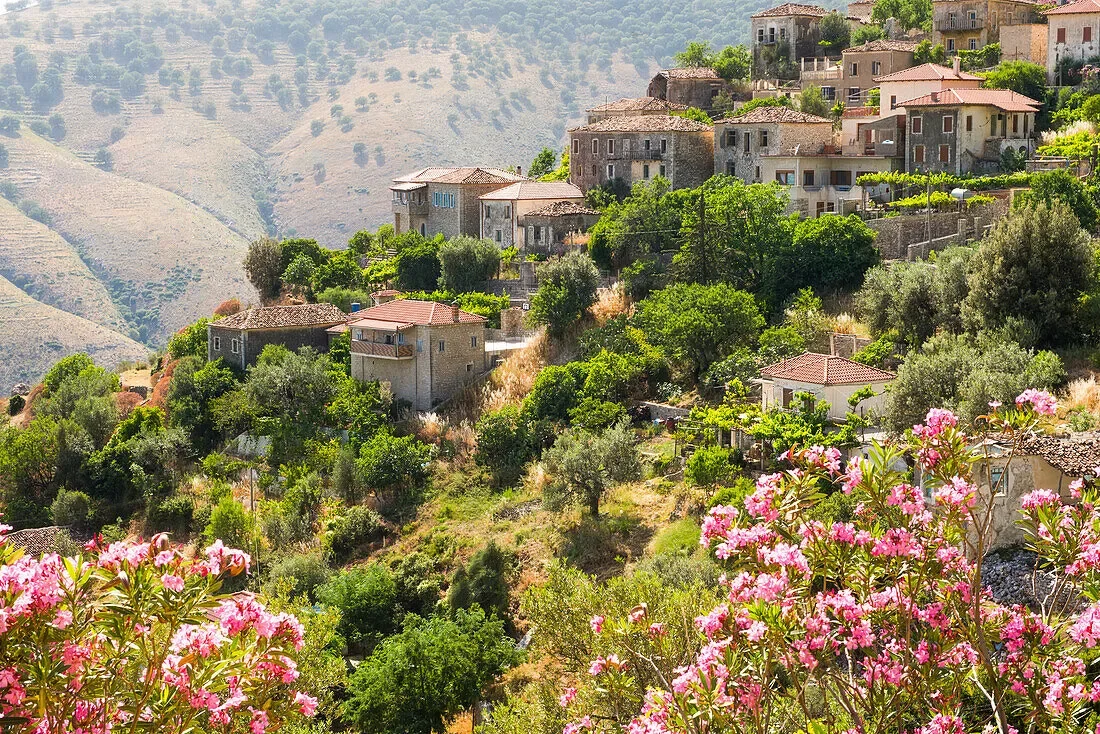
I’ve spent a good portion of this year in Albania, first using it as a home base and then taking every opportunity I could to explore more of the country. What continues to surprise me is how much variety is packed into such a relatively small place. In the span of two weeks, you can go from jagged alpine peaks and glacial rivers to Ottoman-era villages and some of the clearest water I’ve seen in Europe.
If I were planning a first trip to Albania now, I would do it north to south: fly into Tirana, tackle the Albanian Alps before you have a rental car to worry about, return to Tirana to pick up a car, and then slowly drive the Riviera before taking the ferry from Sarandë to Corfu for the flight home.
And yes, I purposely put the mountains before the beaches. After hiking from Valbonë to Theth, you will have earned those beach days.
Day 1: Arrive in Tiranë
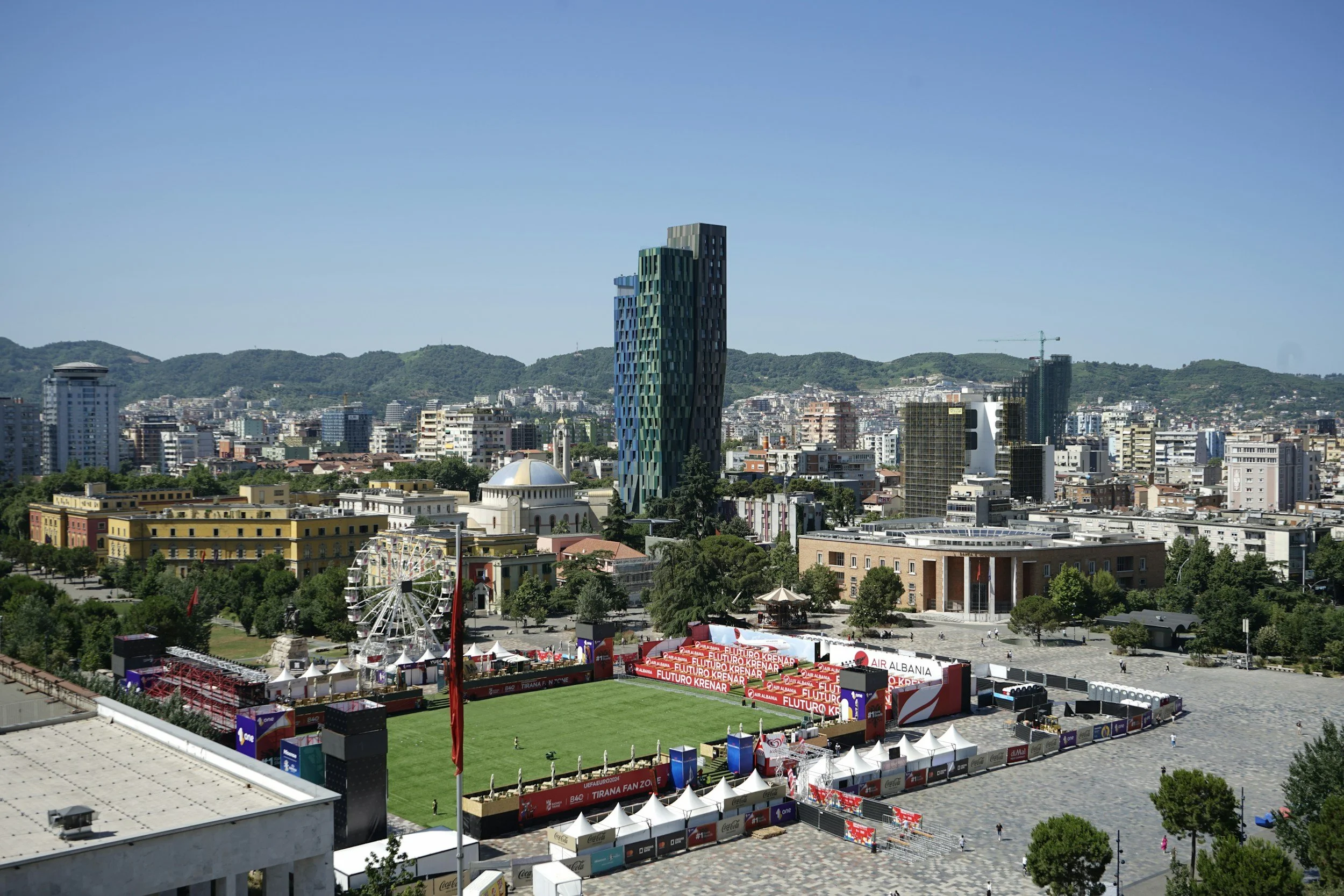
I would start with one night in Tiranë rather than landing and immediately trying to make your way north. Albania is going to throw plenty of logistics at you over the next several days; this is the night to check in, shower, go for a walk and ease into the trip.
How much I would plan depends entirely on arrival time.
If you arrive early enough, start around Skanderbeg Square and visit BUNK'ART 2. I think seeing it at the beginning of the trip is particularly worthwhile because Albania's communist period explains so much of what you'll see later — the bunkers scattered across the countryside, the country's rapid development and, to some extent, why Albania can feel so different from its neighbors. BUNK'ART 2 occupies a former Interior Ministry nuclear shelter underneath central Tirana and focuses heavily on surveillance, political persecution and life under the communist regime.
From there, I would walk toward the Pyramid of Tirana. It was originally built in 1988 and has now been completely reinvented as a contemporary cultural and technology space. You can walk up the exterior stairs for views over the city, which is a pretty perfect visual representation of modern Tiranë: communist architecture being repurposed beneath a skyline of cranes and new towers.
Then continue into Blloku. During communist rule this area was restricted to the political elite; today it is full of cafés, restaurants and bars. I wouldn't necessarily schedule a formal dinner reservation for the first night unless arrival time makes sense — I would rather wander, stop somewhere that looks lively and start getting a feel for the city.
Where I'd stay: Tiranë Marriott. For this itinerary, I like having something polished and uncomplicated at the beginning and end of the northern loop. It's central, close to Blloku and the Grand Park, and easy enough to use as a base without spending half the day dealing with hotel logistics.
If the flight arrives late: skip all of the above without guilt. Have dinner, sleep and save your proper Tiranë exploration for Day 6.
Day 2: Tiranë → Shkodër
Head north to Shkodër, the jumping-off point for the Albanian Alps.
I would try to arrive by late morning or around lunchtime so this doesn't become another pure transit day. After checking in, start with the pedestrian center around Rruga Kolë Idromeno. Shkodër has a very different feel from Tiranë — lower-rise, more relaxed and with a noticeable Venetian influence in the architecture. The promenade leads past cafés, shops and the Marubi National Museum of Photography, which I would keep in my back pocket if it's extremely hot or the weather isn't cooperating.
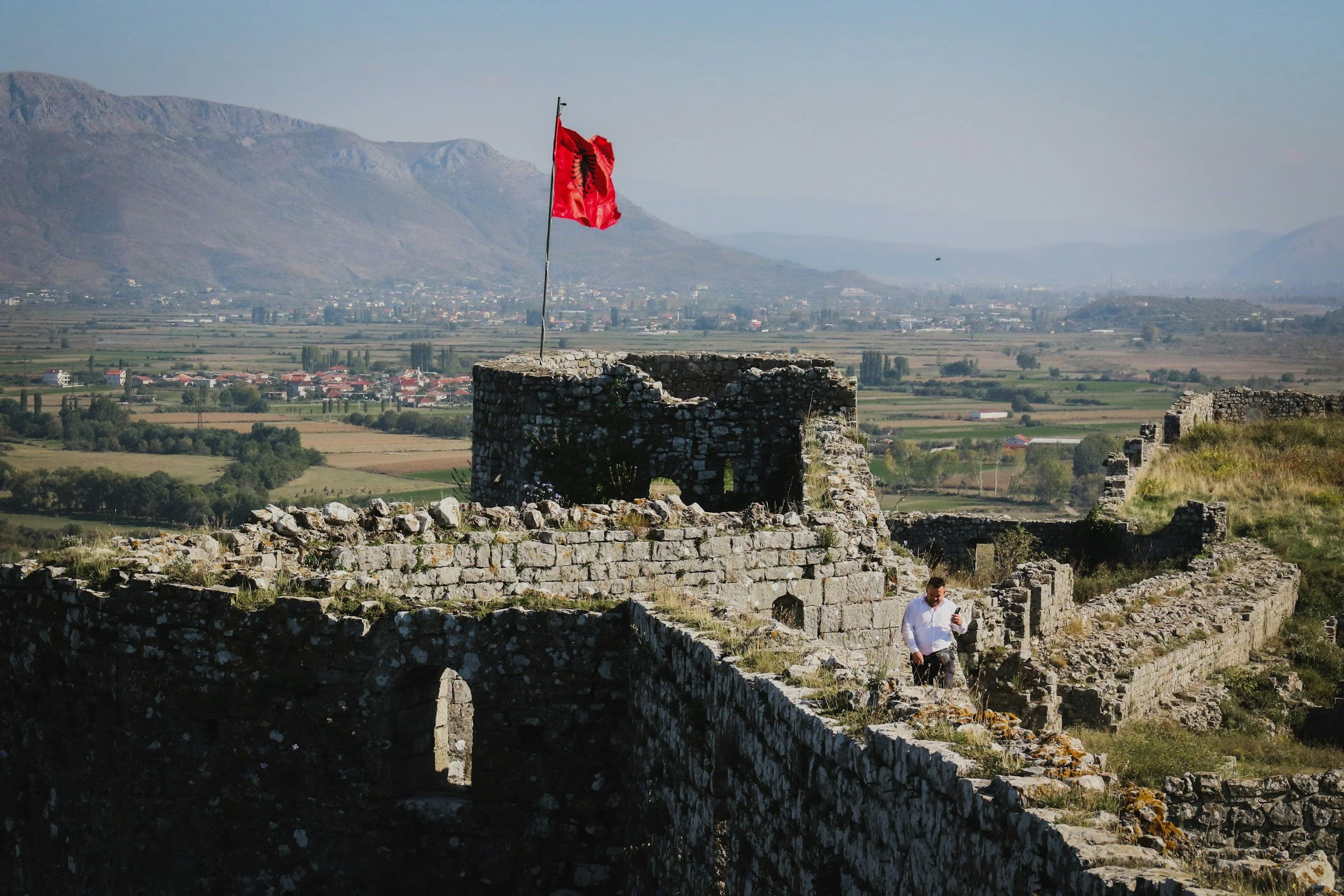
Later in the afternoon, go up to Rozafa Castle. The ruins themselves span multiple eras, but I think the location is almost as compelling as the history: from the hilltop you can see Lake Shkodër and the meeting of the Buna and Drin river systems below. I would give yourself at least an hour rather than treating this as a quick photo stop.
Then I would head out to Shirokë on the lake.
This is where I would add the kayaking or SUP experience I wish I had built more deliberately into my own northern loop. Drini Times operates from Shirokë and offers both kayaks and stand-up paddleboards, with routes that take you from Lake Shkodër toward the Buna River and wetlands. For this itinerary, I wouldn't commit to their long five-hour route unless paddling is a priority; I would arrange a shorter guided session or rental and simply spend an hour or two on the water. Recent 2026 travelers specifically mention the quiet scenery, wildlife and how much more interesting the landscape becomes once you paddle away from shore.
Stay out in Shirokë for dinner afterward. Lake fish — particularly carp — is one of the specialties here, and sunset over the water makes this a much nicer end to the day than immediately returning to the city center.
Where I'd stay: Hotel Çoçja. It's right in the center near the pedestrian area and Marubi museum, but it still feels like a small boutique property rather than a generic city hotel.
My tip: this is where I would leave the large suitcase. Pack only what you need for Valbonë and Theth into a small backpack and have the Shkodër hotel hold everything else until you return. Do not carry two weeks' worth of clothing over the Valbonë Pass.
Day 3: Shkodër → Lake Koman → Valbonë
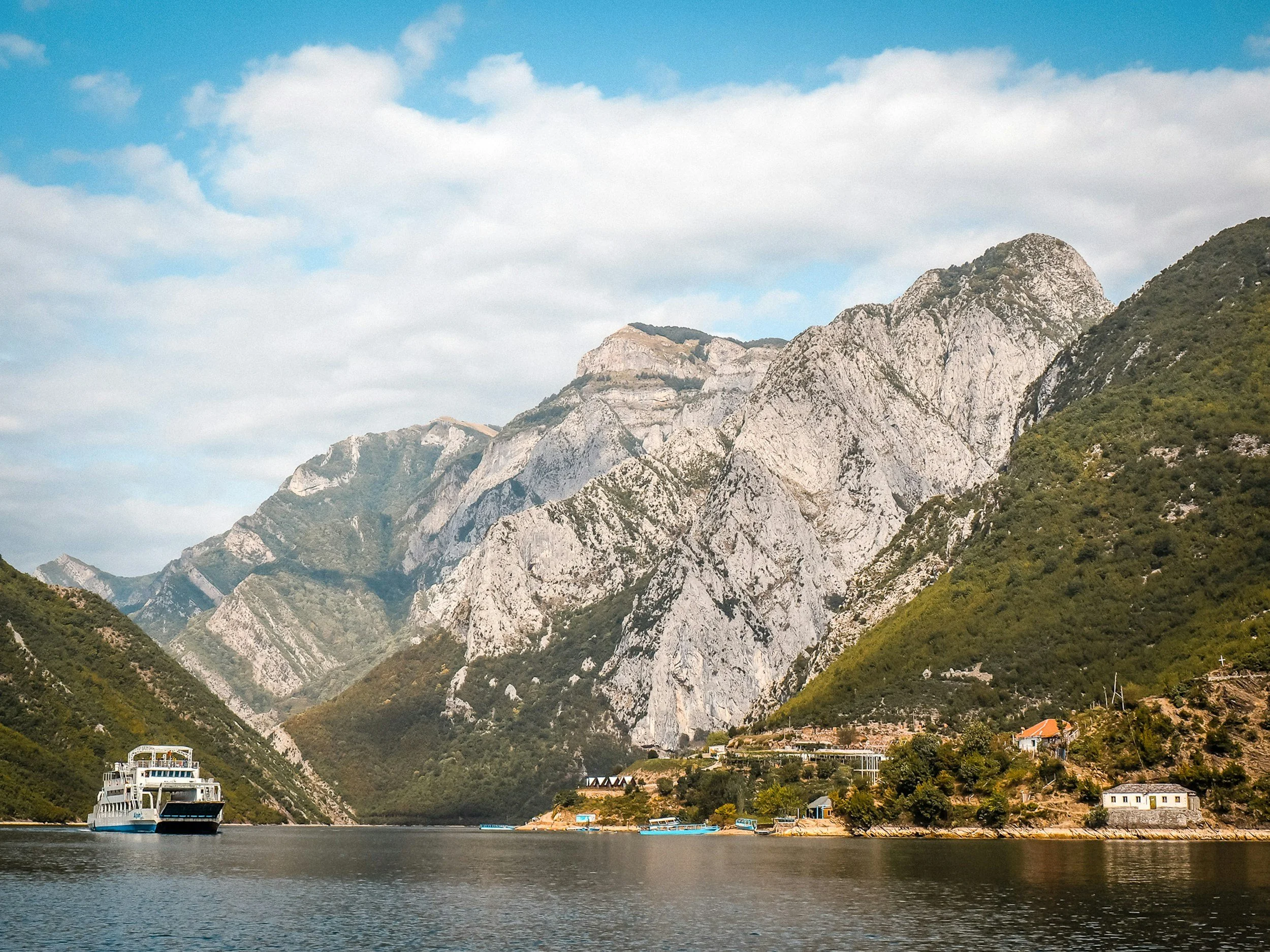
Today is one of those rare travel days where the transportation itself is one of the main reasons to go.
This is also the day I would pre-arrange every segment rather than trying to piece it together on arrival.
Komani Lake Ferry Berisha currently operates a coordinated route that makes the whole chain relatively straightforward: a Shkodër pickup for Koman, the ferry from Koman to Fierzë and onward transportation from Fierzë into Valbonë. Their published 2026 schedule lists the Shkodër–Koman transfer at 7:00 a.m., the Koman–Fierzë ferry at 9:00 a.m. and an onward Fierzë–Valbonë transfer around midday. I would still reconfirm everything for the actual travel date because this is exactly the kind of Albanian transportation where schedules can evolve seasonally.
And I would warn clients in advance that the beginning of the morning may feel a little chaotic.
There may be vans, bags being shifted between vehicles and people asking which guesthouse you're staying at. This is one of those Albania moments where you may briefly wonder whether everyone knows what is happening — and then somehow you and your luggage arrive exactly where you are supposed to be.
Once you're on Lake Koman, sit outside if weather permits. The boat passes through steep limestone mountains and narrow channels of green water that can feel more like a fjord than a lake. I would bring a light layer even in summer, along with water and a snack, and keep the camera somewhere accessible rather than buried inside the luggage.
After reaching Fierzë, continue into Valbonë Valley and check in.
I would do almost nothing once you arrive. Walk along the valley, have dinner at the guesthouse, pack tomorrow's backpack and go to bed early.
Where I'd stay: Jezerca Experience. What appeals to me here isn't conventional luxury — that doesn't really exist in this part of Albania yet — but a more thoughtful version of the traditional mountain stay. The property combines alpine villas with a restored century-old kulla and a restaurant focused on regional ingredients and traditional cooking.
Day 4: Hike from Valbonë to Theth
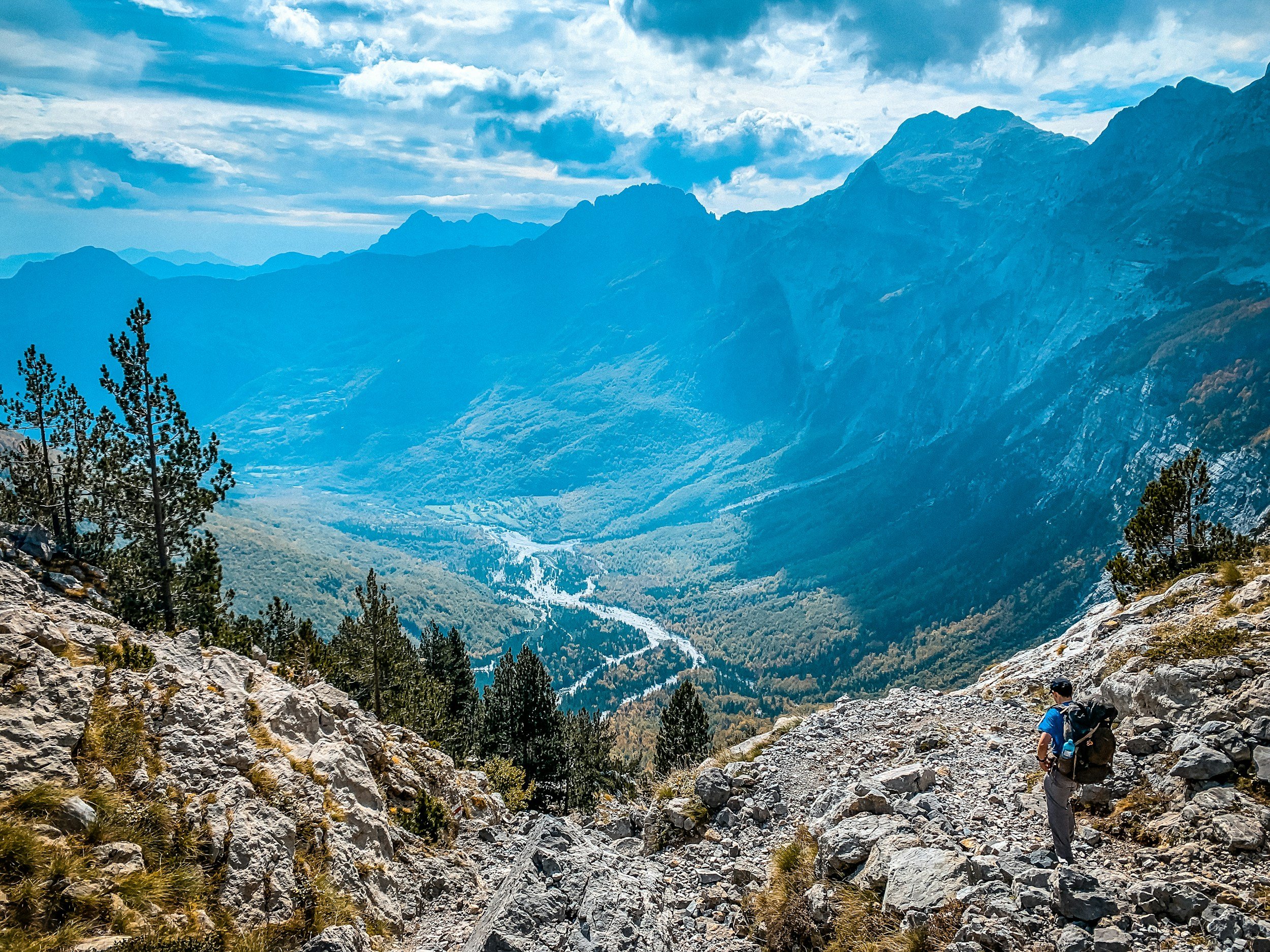
This was the day that humbled me.
I knew it was a real hike. I had read the distances. I understood that there was a mountain pass involved.
It was still much harder than I anticipated.
Depending on exactly where your guesthouses are located, the crossing is roughly 15–18 kilometers and usually takes somewhere around six to eight hours. The high point is the Valbonë Pass at just under 1,800 meters. There is no technical climbing under normal summer conditions, which is why you'll frequently see the hike described as “moderate,” but I think that word undersells the cumulative effect of the elevation gain, rocky trail, heat and long descent.
One logistical detail I would absolutely arrange is a ride from your guesthouse to the actual trailhead around Rragam. Walking the extra road distance through Valbonë before the hike even starts adds time and miles without adding much to the experience; local guesthouses can generally arrange the short transfer.
I would leave early — ideally after an early breakfast — and carry plenty of water, sunscreen, some food, a light layer and cash. There are seasonal cafés or huts along parts of the route, but I would treat anything available on the mountain as a bonus rather than something my day depends on.
And I would bring trekking poles. I didn't appreciate before doing it how useful they would be, particularly once fatigue sets in and the trail becomes a long rocky descent.
The moment you reach the pass is spectacular. Give yourself time there. Eat something. Take the photos. Actually look around rather than immediately starting down the other side.
If I were arranging this for clients who are active but not particularly experienced hikers, I would also strongly consider a local guide. The main route is well established in summer, but a guide removes the stress of navigation, watches the mountain weather and can adjust the pace to the group. Guided crossings with luggage-transfer logistics are available locally.
By the time you arrive in Theth, I would have exactly one agenda item: shower.
Where I'd stay: Vidis Chalet Boutique Hotel. This is one of the more elevated mountain stays I've found in Theth, and the on-site restaurant is a major plus after the hike — you can sit down to dinner with mountain views without having to summon the willpower to go anywhere else.
I'm actually planning to return at the end of October and hike the route in reverse, from Theth to Valbonë, assuming the weather cooperates. Partly I want to see whether I feel differently about the trail from the other direction; mostly I want to see these mountains in fall instead of summer.
Day 5: Theth
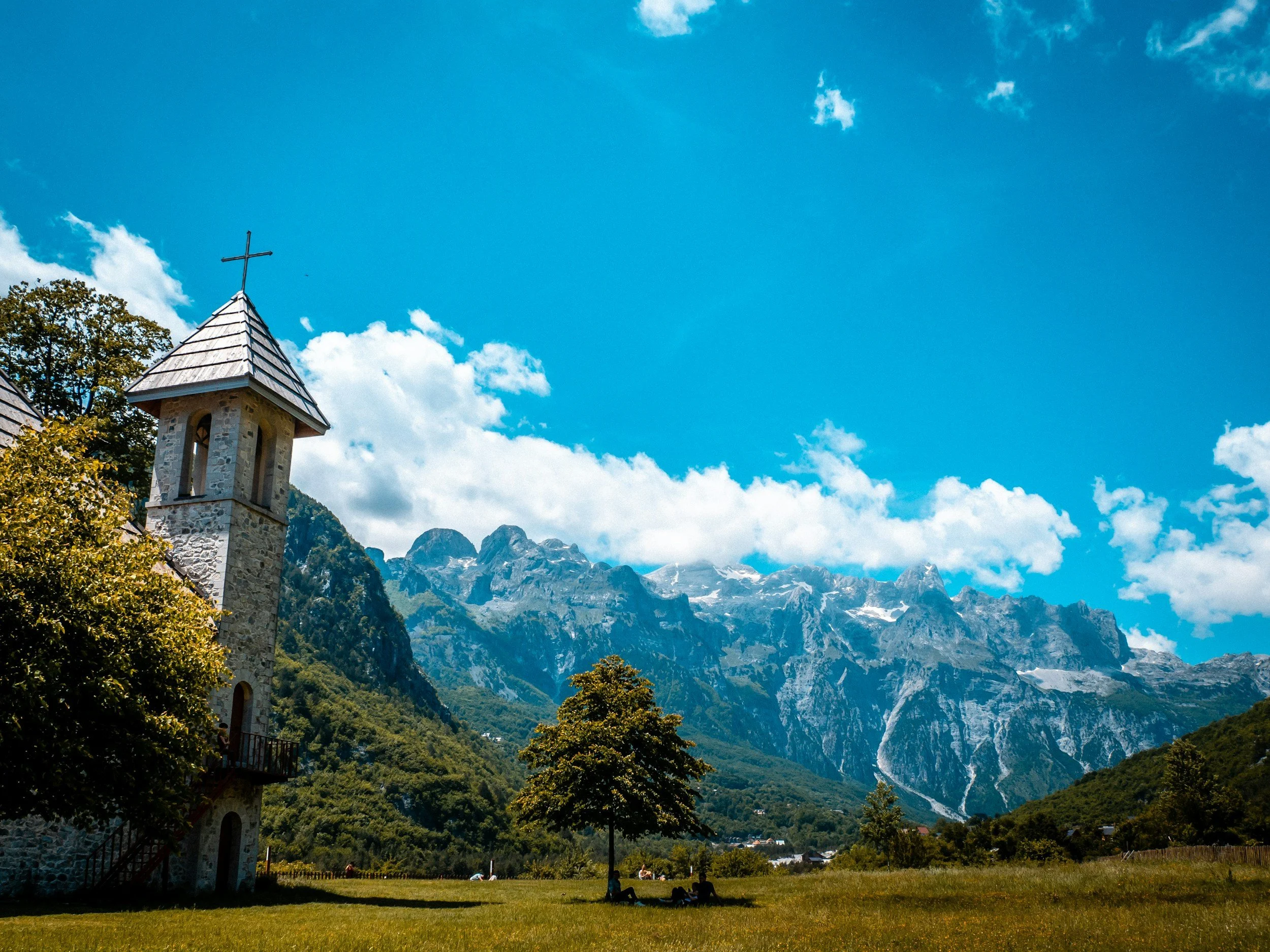
I would make this a combination of village wandering, one manageable nature outing and a lot of sitting somewhere pretty.
Start around the Church of Theth, one of the images you'll see over and over when researching Albania. Walk around the village, follow the river and visit the Lock-in Tower if you're interested in learning more about the old Kanun traditions and blood-feud history of northern Albania.
If your legs are surprisingly cooperative, Grunas Waterfall is the easiest additional hike I would consider. The waterfall is roughly a 30-minute walk from the village and gives you another good dose of mountain scenery without immediately committing to several more hours on the trail.
I would then have a very long lunch — particularly if you're staying at Vidis, where the restaurant looks directly into the surrounding peaks. This is a day where I actively want a two-hour lunch.
Then decide how everyone feels.
If you're up for another adventure, arrange a local transfer or 4x4 down the valley to Nderlysa for the Blue Eye of Theth. This is completely different from the famous Blue Eye in southern Albania. From Theth, Nderlysa is roughly 7 kilometers by road; from there you walk the final approximately two kilometers through the gorge to reach the spring. The last stretch takes roughly 40–50 minutes each way and is rocky and steep in places, so I would allow a relaxed half day rather than pretending this is a fifteen-minute attraction.
The water is freezing. Even in summer, published estimates put it in the single digits Celsius. People absolutely do get in, but this is less “refreshing Mediterranean swim” and more “how long can I tolerate having functioning nerve endings?”
If everyone wakes up sore from yesterday, skip the Blue Eye completely. Sit beside the river, eat, read and enjoy being in the Alps.
That is exactly why I want two nights in Theth.
Day 6: Theth → Shkodër → Tiranë
Head back down from Theth, stop in Shkodër to collect the luggage you left behind, and then continue to Tiranë.
This is one day where I would seriously consider paying for a private transfer instead of relying entirely on the shared vans. The published shared schedules don't necessarily line up well with trying to enjoy Tiranë that afternoon, and after several days of ferries, vans and hiking, having someone pick you up at your hotel and take you back through Shkodër is a luxury I think is actually worth paying for. The current shared transfer schedule has Theth–Shkodër departures at 11:00 and 17:00, which illustrates why an earlier private departure buys you significantly more usable time.
If you didn't paddle Lake Shkodër on Day 2, you could do it before continuing south — but personally, if I've already done the lake, I would use the extra time back in Tiranë.
One option I really like is seeing the city by bike. Bike Rental & Tours by BikeTirana runs an easy 10–12 kilometer Highlights & Grand Park ride covering the New Bazaar, Skanderbeg Square, Blloku, the Pyramid and the lake area. Their standard tour takes roughly 2½–3 hours, and they also offer shorter and private formats. I like this because Tiranë is flat and fairly compact, so a bike lets you see neighborhoods you probably wouldn't bother reaching on foot.
I would consider the bike tour optional depending on transfer timing. If you want to do both the bike ride and the evening experience below, I would request an earlier/private bike departure. Otherwise, move the bike tour to Day 1 if the flight arrives early enough.
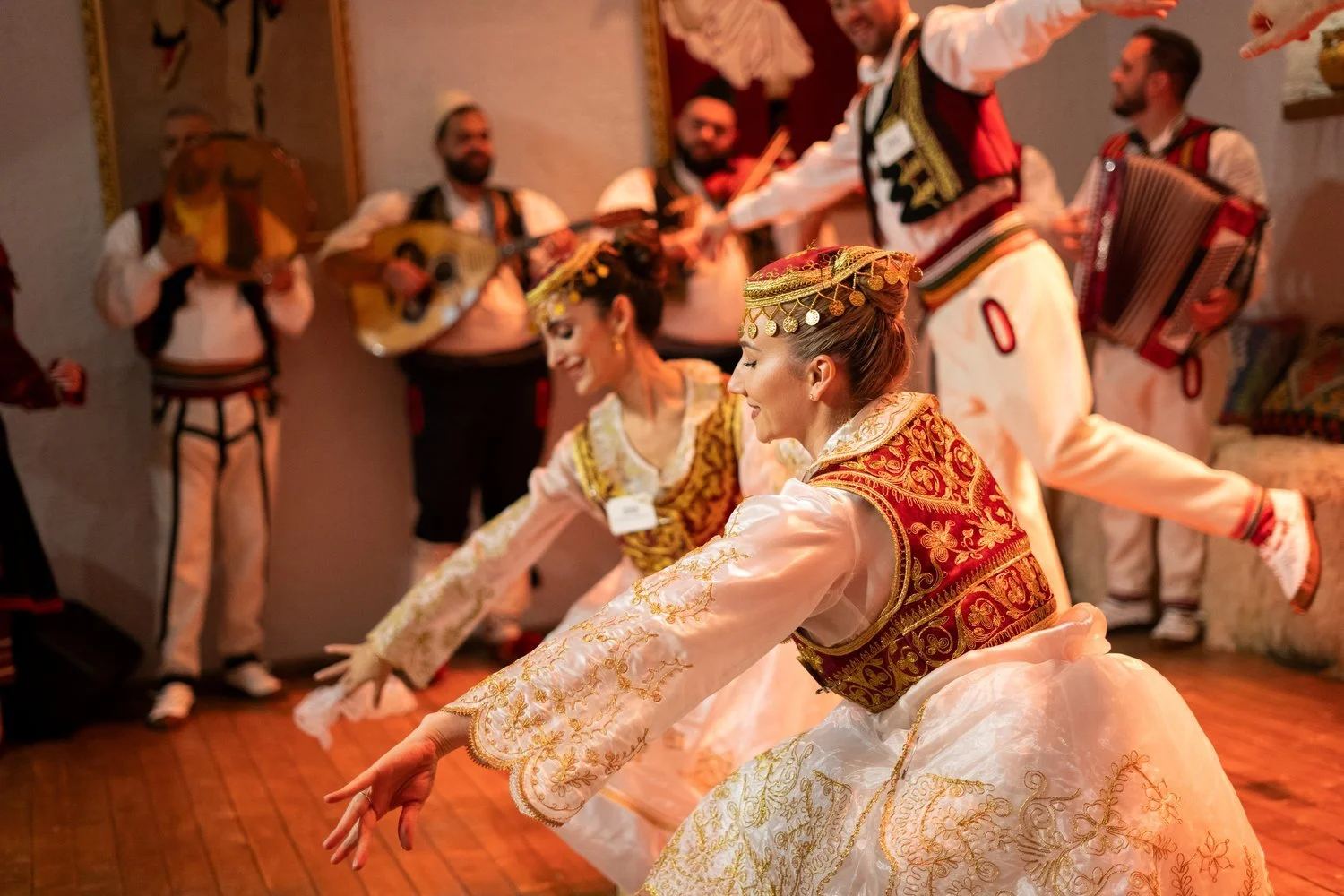
The one thing I would prioritize this evening is Albanian Night.
It is admittedly more produced than stumbling into a village celebration somewhere in the mountains, but that's exactly why I think it works here: you've just spent several days traveling through northern Albania, and the show gives some context to the costumes, music, regional dances and traditions you've been seeing along the way. The Show & Dinner experience currently runs about 2½ hours and includes traditional clothing, live music and dance followed by a meal featuring dishes from different parts of the country.
I think it is a really fun way to close the northern part of the trip.
Stay at the Tiranë Marriott again tonight and pick up the rental car tomorrow morning.
Day 7: Tiranë → Llogara Pass → Palasë / Dhërmi
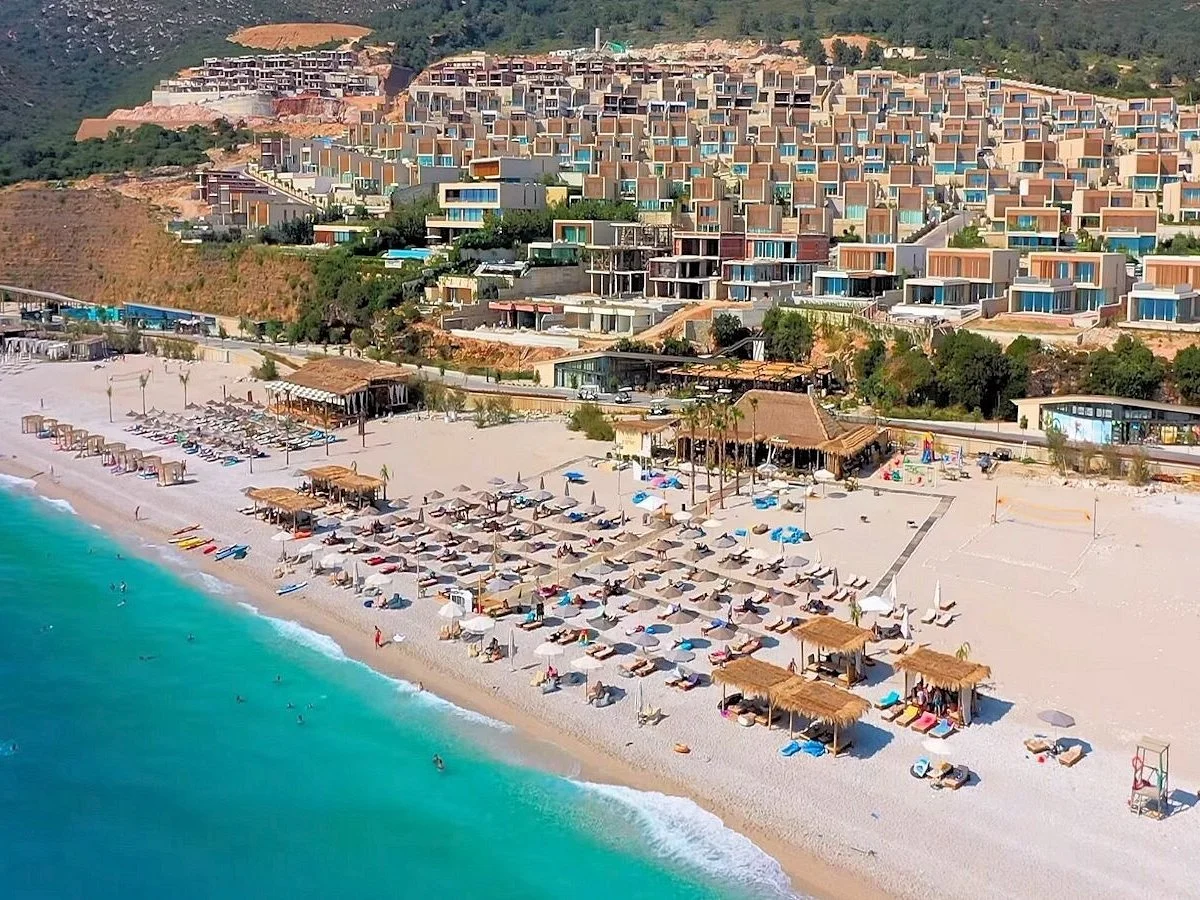
Today, the entire trip changes character.
Pick up the rental car in Tirana after breakfast and head south. Once you're past Vlorë and approaching the mountains, the drive becomes part of the itinerary rather than simply transportation.
And there is one very important decision here: do not automatically follow Google Maps through the Llogara Tunnel if the weather is clear.
The tunnel is the fast option and has dramatically shortened the drive to the Riviera since opening, but the old Llogara Pass road is still open and climbs to just over 1,000 meters before dropping dramatically toward the Ionian Sea. That first view over Palasë and the coastline is one of those Albania moments I would deliberately build the day around.
I would take the old pass road, stop at the viewpoint, have a coffee somewhere near the top and give yourself time to actually appreciate the change in landscape. Within a relatively short drive, you go from pine forest and mountain air to an almost Greek-looking coastline far below you.
If the weather is foggy, rainy or you're arriving after dark, take the tunnel. There is no travel prize for white-knuckling your way around a mountain road when you can't see the view anyway.
Then descend to Palasë and check into Green Coast Hotel - MGallery Collection.
This is where I would spend money on the hotel.
After guesthouses and mountain transfers in the north, I want the contrast: infinity pool, spa, beach, a beautiful room and nowhere I'm obligated to be. Green Coast is a five-star MGallery property directly on the coast, with its own beach, pool and multi-level spa.
I would intentionally not continue sightseeing after check-in.
Go to the beach. Swim. Have a drink. Use the spa. Watch the sun go down.
You have officially reached the Riviera.
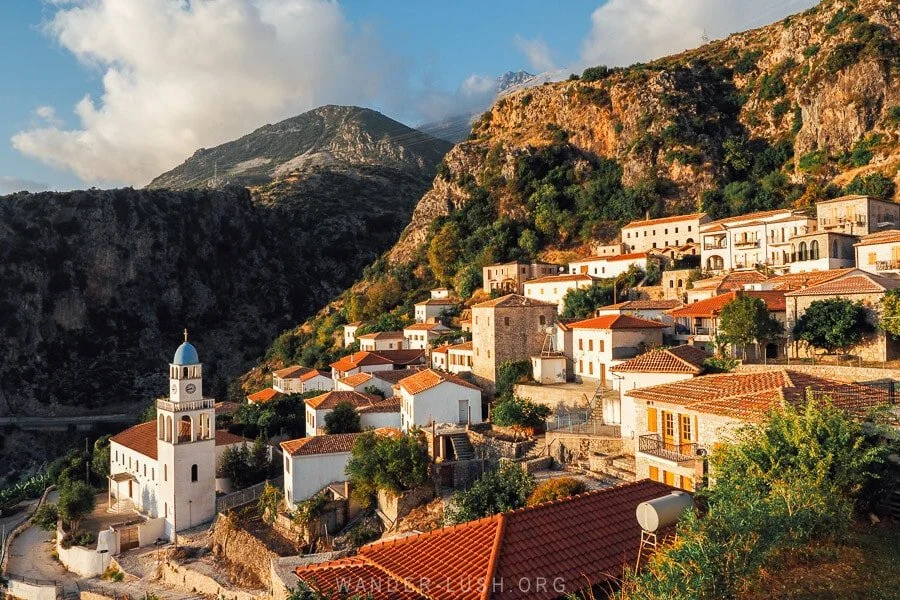
Day 8: Dhërmi — Beach Below, Old Village Above
Leave today largely unplanned.
Sleep in. Have a late breakfast. Spend the hottest part of the day down by the water. Rent a sunbed, swim, have lunch and walk along the beachfront.
One of the things Albania has reinforced for me is that I do not need to schedule a tour every single day for a trip to feel interesting. On the Riviera, sometimes the coastline is the activity.
But later in the afternoon, I would completely change environments and head uphill to old Dhërmi.
This is one of the reasons I prefer Dhërmi to simply staying at a beach resort somewhere along the coast. You have the beach below, but only a short drive uphill are old stone houses, steep lanes and historic churches. It feels like you've gone somewhere entirely different without actually changing destinations.
Walk through the old village and continue up toward St. Mary's Monastery. The small Orthodox monastery sits above the village and dates in part to the medieval period; the real reward for me, though, would be the terrace and the views back across the red roofs toward the Ionian Sea. The church interior isn't guaranteed to be open outside services, so I would treat getting inside as a bonus and go for the setting regardless.
Then make a dinner reservation at Zoe Hora Restaurant.
The restaurant sits high in the old village and has an outdoor terrace designed around those views. I would reserve for late afternoon or around sunset and specifically request an outdoor table if available. Their menu leans Mediterranean while using local ingredients, so this feels like the right night to have a slower, more elevated dinner rather than another beach-club meal.
I love the juxtaposition of this day: swimsuit and sunbed for the first half, then stone streets, a centuries-old church and dinner overlooking the coast in the evening.
Day 9: Dhërmi → Gjipe → Vuno → Himarë
Continue south toward Himarë, but again, I would not simply plug the hotel into Google Maps and drive straight there.
And I would actually move Porto Palermo and Qeparo off this day, because they fit much more naturally into the Himarë–Sarandë drive on Day 11. That keeps us from doubling back and gives today a completely different character.
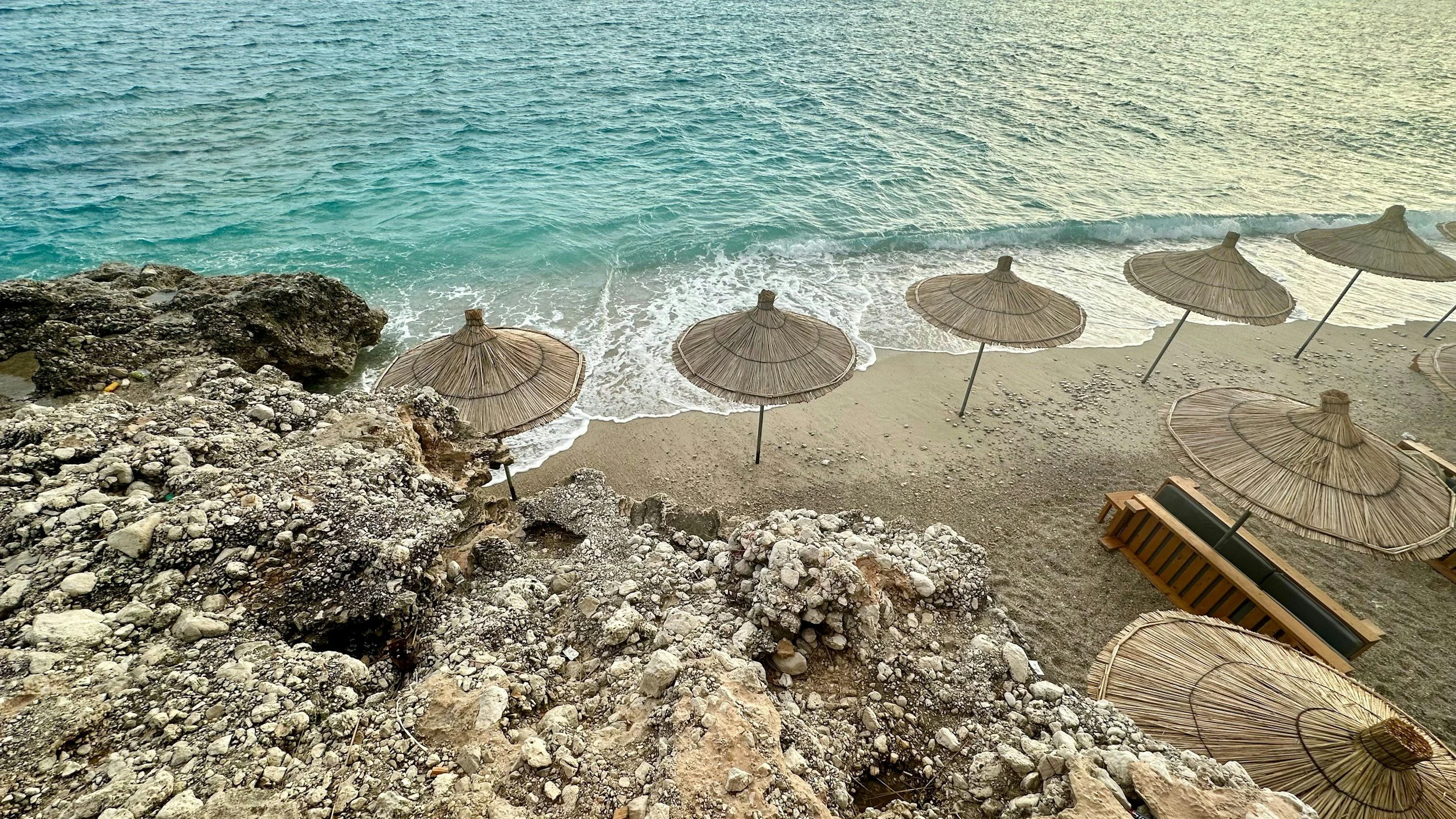
My major stop would be Gjipe Beach.
Gjipe sits at the bottom of a canyon between Dhërmi and Vuno and is one of the more dramatic beaches along this stretch because you cannot simply park beside the water. From the main parking area above the canyon, expect a rocky downhill walk of roughly 20–30 minutes, with a somewhat longer uphill return. Proper shoes are helpful; I would not do this one in flimsy flip-flops.
I would go earlier in the day, swim for a couple of hours and then hike back up before the hottest part of the afternoon.
If the thought of another rocky hike after Valbonë–Theth causes a mutiny, skip it. This is vacation.
Instead, stop at Vuno, the small stone village above the coast, and then continue down toward Jalë Beach for lunch and a swim. Vuno has cobbled lanes, stone houses and several historic churches, while both Jalë and Gjipe sit directly below it along the coast.
Then continue to Himarë and check in.
Where I'd stay: Miamar Luxury Hotel for the more resort-like option. It's directly on Livadhi Beach and has a wellness area, which I would be very happy to see after the previous week of hiking and road-tripping.
For something smaller and more intimate, Rea Boutique Hotel is the option I would look at. It is a small contemporary property with panoramic sea views near the port rather than a full-service beach resort.
If you still have energy around sunset, I would make one final outing to Himarë Castle / Old Himarë above town.
This is another stop I think gets overlooked when people treat the Riviera exclusively as a beach destination. The hilltop settlement still has old walls, stone houses, churches and people living within parts of the historic village. More importantly at this point in the trip, the views back over Himarë and the Ionian coast are spectacular.
Then head back down for dinner.
Tomorrow, we get on the boat.
Day 10: Himarë & the Coast by Boat
Today I would get out on the water.
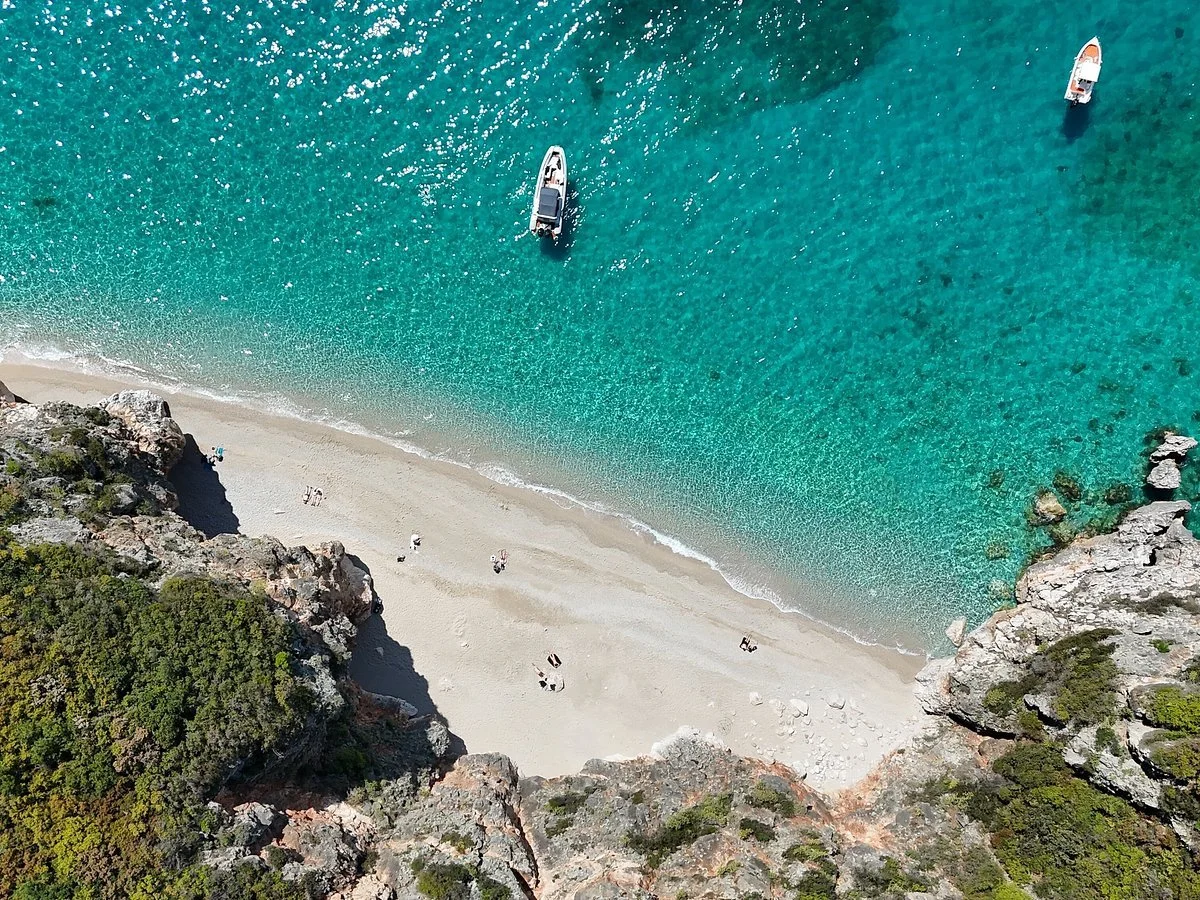
The Riviera makes much more sense from a boat. There are beaches, caves and tiny coves tucked beneath the cliffs that you simply cannot appreciate from the road — and several of the best ones are difficult or impossible to reach any other way.
If I were booking this for a client, I would start with Himara Watertaxi - Boat trips Albania. Their private Coastline Tour is almost exactly what I would want for this day: approximately 3.5–4 hours covering both the northern and southern coastline from Himarë. The route includes places like Livadhi and Aquarium Bay, Gjipe Beach, Secret Cave, Pigeons Cave and Pirates Cave to the north, before heading south toward Filikuri Beach, Llamani, the old submarine bunker and the coves around Porto Palermo. Because it is private, there is much more flexibility to spend your time swimming somewhere you love rather than following a rigid group schedule. At the time I researched it, private trips started around €300, but I would always reconfirm current pricing.
For something more ambitious, Grama Bay would be my other choice. It requires a longer boat day but takes you farther along the wild coastline to one of Albania's most dramatic, boat-access beaches. Himara Watertaxi runs a Grama Bay route, and Himara Nautica One also offers a roughly five- to six-hour Blue Cave & Grama Bay itinerary.
Personally, I think the shorter private coastline trip fits this two-week itinerary better. You have already been moving around quite a bit, and I don't think every day needs to become an eight-hour excursion.
I would ask for a morning departure while the water is generally calmer, bring a snorkel mask, and make sure the itinerary includes enough actual swim time. Pirates Cave is particularly dependent on sea conditions, so I would also ask the skipper that morning whether it is safe to actually enter the cave rather than simply viewing it from outside.
Come back to Himarë for a late lunch, then do absolutely nothing for the rest of the afternoon. Go back to the beach, nap, have a drink along the promenade and enjoy not having anywhere else you need to be.
Day 11: Himarë → Porto Palermo → Qeparo → Borsh → Sarandë
I would treat today as a coastal road trip rather than a transfer day.
The actual distance between Himarë and Sarandë isn't particularly intimidating, so there is no reason to rush directly to the hotel. This stretch of the Riviera is one of my favorite parts of the drive, and the stops are different enough that the day doesn't feel like an endless series of beaches.
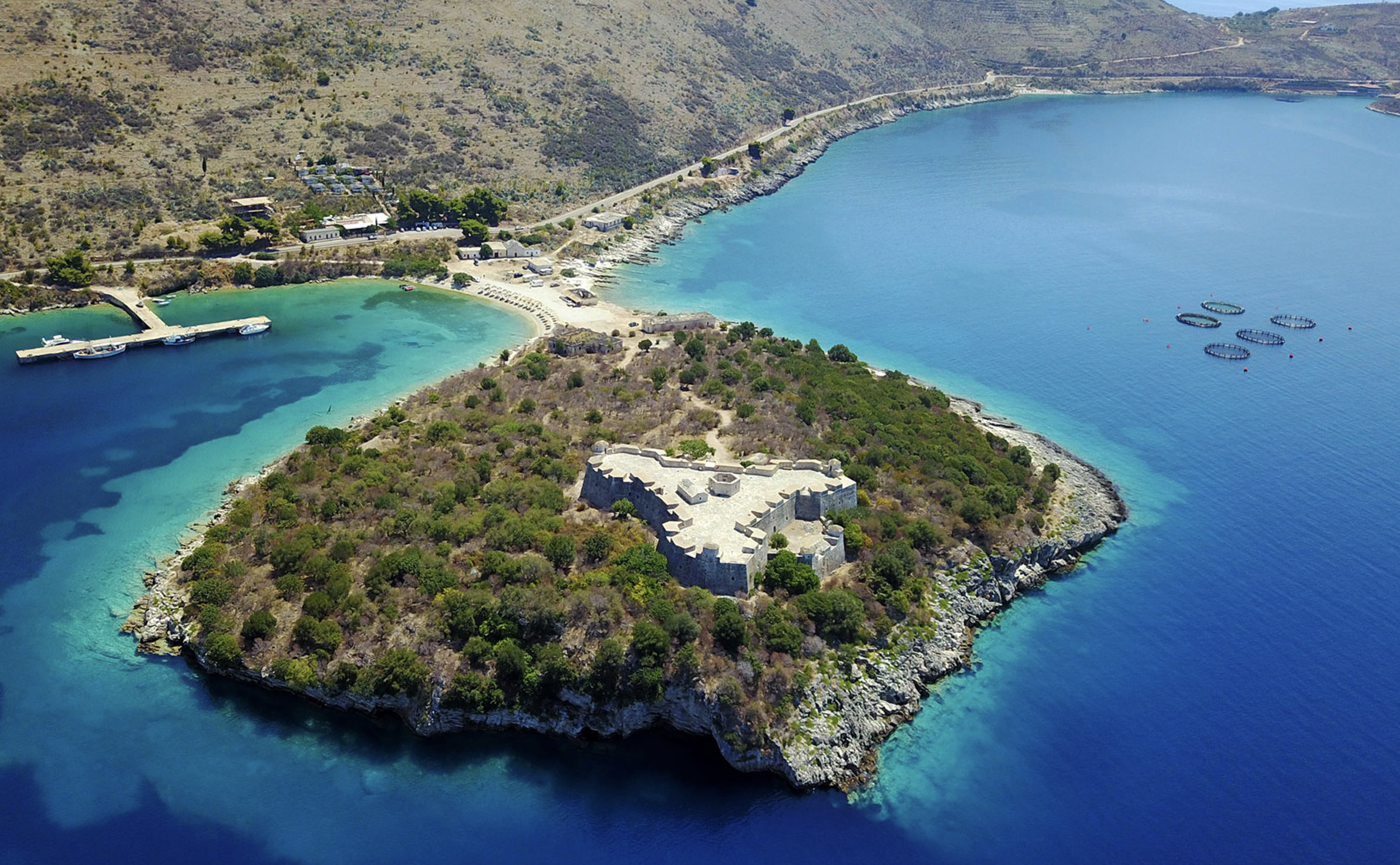
My first stop would be Porto Palermo. Even if you saw the bay from the water yesterday, I would still come back by car to visit The Castle of Porto Palermo. The early-19th-century fortress sits on its own little peninsula surrounded by impossibly blue water, and the views from the top are worth the stop. There is also a protected bay here if you want a quick swim before continuing south.
From there, continue about ten minutes to Qeparo, but don't stop only at the coastal part. Drive uphill to Old Qeparo, where stone houses and narrow lanes cling to the hillside above the sea. It has a completely different atmosphere from the beach towns below and is another one of those places that reminds you Albania is much more than its coastline. The old village and the newer beach settlement really do feel like two halves of the same destination.
If you're ready for lunch, I would stop at Veranda Restaurant in Qeparo before continuing south.
From Qeparo, I would make Borsh optional depending on how everyone is feeling. Borsh has the longest beach on this part of the Riviera, so if you want one more swim, this is where I would do it. If you would rather trade the beach for another viewpoint, drive up to Borsh Castle instead; the ruins sit high above the coast and have huge views over the Ionian and the surrounding plain.
Then continue through the quieter southern stretch around Lukovë before eventually arriving in Sarandë.
I would resist the urge to add five more stops just because Google Maps tells you they're nearby. Choose two or three, stop when something catches your eye and let the drive itself be part of the day.
Once in Sarandë, check in and stay put for the evening.
Where I'd stay: For an adults-only trip, I still really like the look and feel of Lost Seaside. It gives you a modern hotel, pool and waterfront beach-club atmosphere all in one place. I would take advantage of that tonight and have dinner there rather than getting back in the car. Their dining space is completely outdoors overlooking the water, and the property transitions from beach club during the day into more of a sunset and evening scene at night.
Day 12: Ksamil, Butrint & Mussels on Lake Butrint
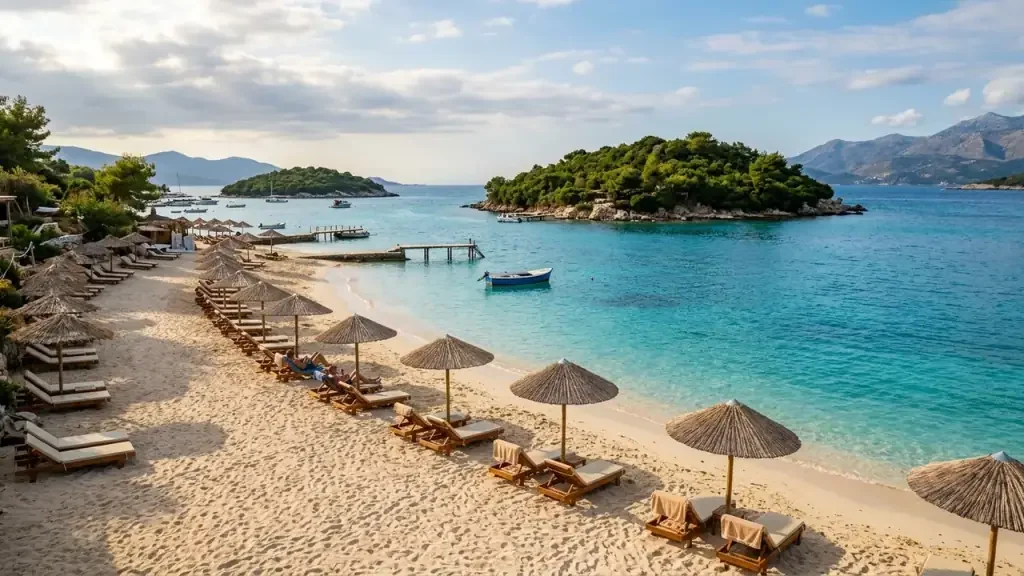
The water really is that beautiful, and I understand exactly why the photos went viral. What I would not do is arrive around noon in July or August and expect a quiet little Mediterranean beach.
For clients who want the polished version of the Ksamil experience, I would reserve a cabana or good set of sunbeds in advance at Principotes Ksamil. It's unapologetically a beach club rather than an undiscovered local beach — cabanas, loungers, restaurant, cocktails and music — but if you're going to experience busy Ksamil, I would rather do it comfortably and intentionally than spend the morning wandering around trying to find two available sunbeds. The property takes advance enquiries for its different cabana and sunbed categories.
I would arrive around 8:30 or 9:00, enjoy the water while everything is still relatively quiet, have an early lunch and then leave the beach when the midday crowds and music really start building.
From there, drive the short distance to Butrint.
And this is one place where I would hire a guide rather than just wander around looking at ruins.
Butrint covers roughly 3,000 years and six civilizations, with Greek, Roman, Byzantine and Venetian layers overlapping throughout the site. Without context, it is very easy to walk past something important without having any idea what you're looking at. The theater, baptistery, basilica and defensive walls become much more interesting once someone connects the pieces.
One specific local option I would look at is Butrint National Park Guide – Victor, a guide based right at Butrint. I would plan on roughly 1½–2 hours for the archaeological site rather than rushing through it.
In the warmer months, I actually like visiting Butrint later in the afternoon. From April through October the park currently admits visitors until 6:00 p.m. and closes at 8:00 p.m., so you can spend your morning swimming and see the ruins once some of the heat and day-trip traffic has eased.
Then I would add one last experience that I think makes this day much more interesting than a standard Ksamil/Butrint excursion: a mussel-farming trip on Lake Butrint.
The lake is an important mussel-producing area, and a local boat experience takes you out to the farms to learn how they are cultivated before tasting them with lemon and olive oil. The shorter version lasts about 45–50 minutes, leaves from the area outside the archaeological site and runs at multiple times throughout the day. Mussel Sailing Tour with Food and Drink Tasting in Albania also offers a longer 2½-hour sailing version that includes three mussel dishes, vegetables, homemade bread, local wine and water.
I really like adding this because it connects the archaeological site to the landscape around it. Instead of visiting Butrint as a collection of ancient ruins and then leaving, you get onto the lake and experience something that is still part of daily life here.
So my ideal version of the day would look something like this: an early morning swim and beach-club time in Ksamil, lunch by the water, Butrint with a private guide in the cooler part of the afternoon, and then a short mussel-farm boat trip and tasting before heading back to Sarandë.
That feels much more like southern Albania to me than spending the entire day on a Ksamil sunbed.
Day 13: Choose Your Own Adventure - Blue Eye or One Last Beach Day
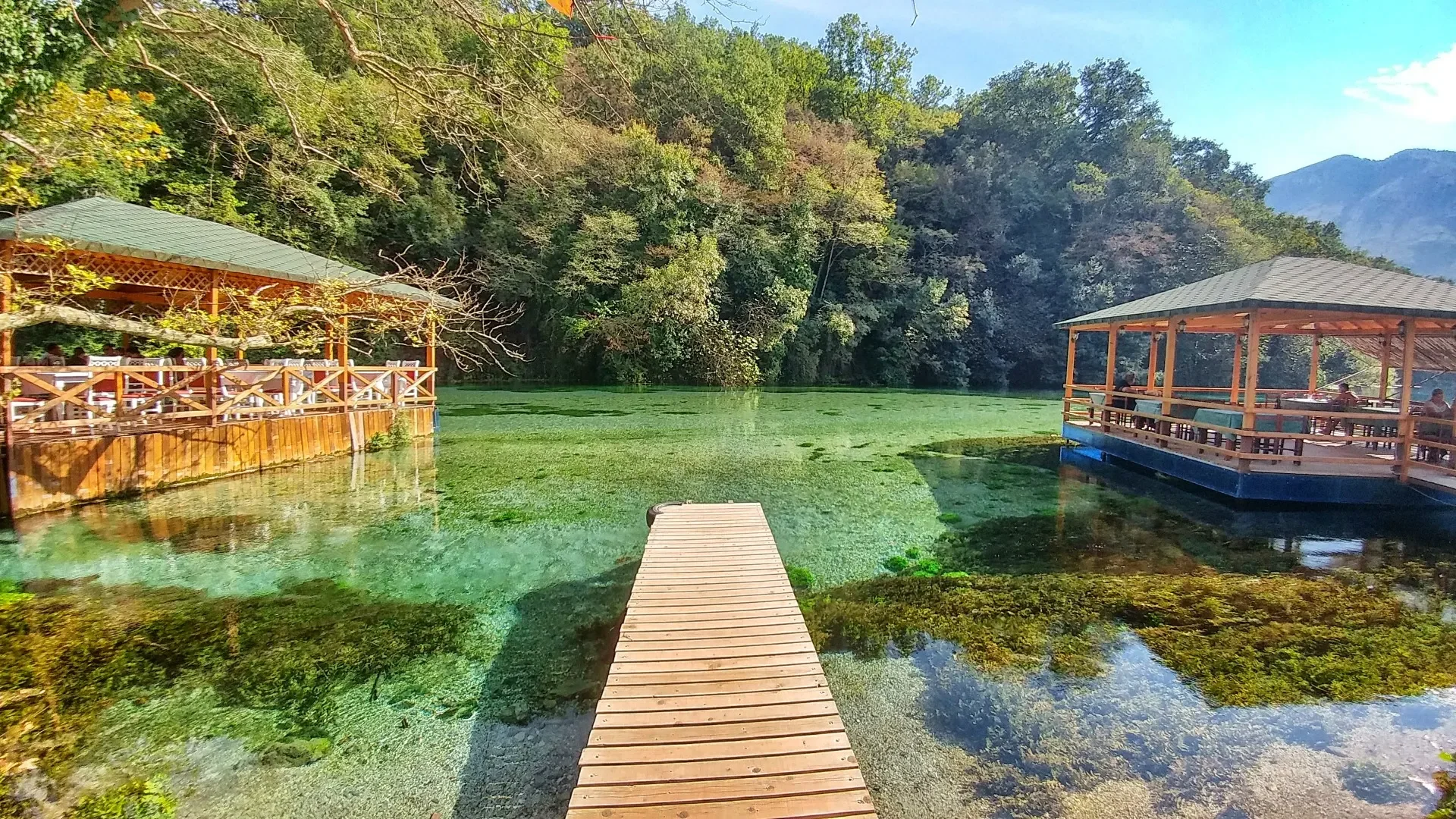
This is where I would make the southern Blue Eye / Syri i Kaltër optional.
I thought it was genuinely beautiful. The water is an almost unreal shade of blue and the river and forest around it are lovely.
I also thought it was way more overtouristed than I expected.
If I were doing it again, I would not drive out there simply to walk to the viewing platform, take a photo and leave. Swimming in the actual spring is prohibited, which makes the quick-stop version of the experience feel even more rushed. Recent visitor reports echo the crowd issue, particularly around midday.
Instead, I would turn the Blue Eye into a full day. Go early, kayak on the surrounding waterways, linger over lunch beside the Bistrica River, and find one of the river areas downstream where you can actually get into the water. You could even spend the night in this area rather than returning immediately to Sarandë.
That, to me, is a completely different experience from being one of hundreds of people funneling through the same viewing platform for twenty minutes.
If that doesn’t appeal to you, skip it. Have another beach day. Take a boat. Eat seafood. Albania has enough beautiful scenery that I don’t think you need to collect every attraction simply because it appears on a “must-see” list.
Day 14: Sarandë → Corfu → Home
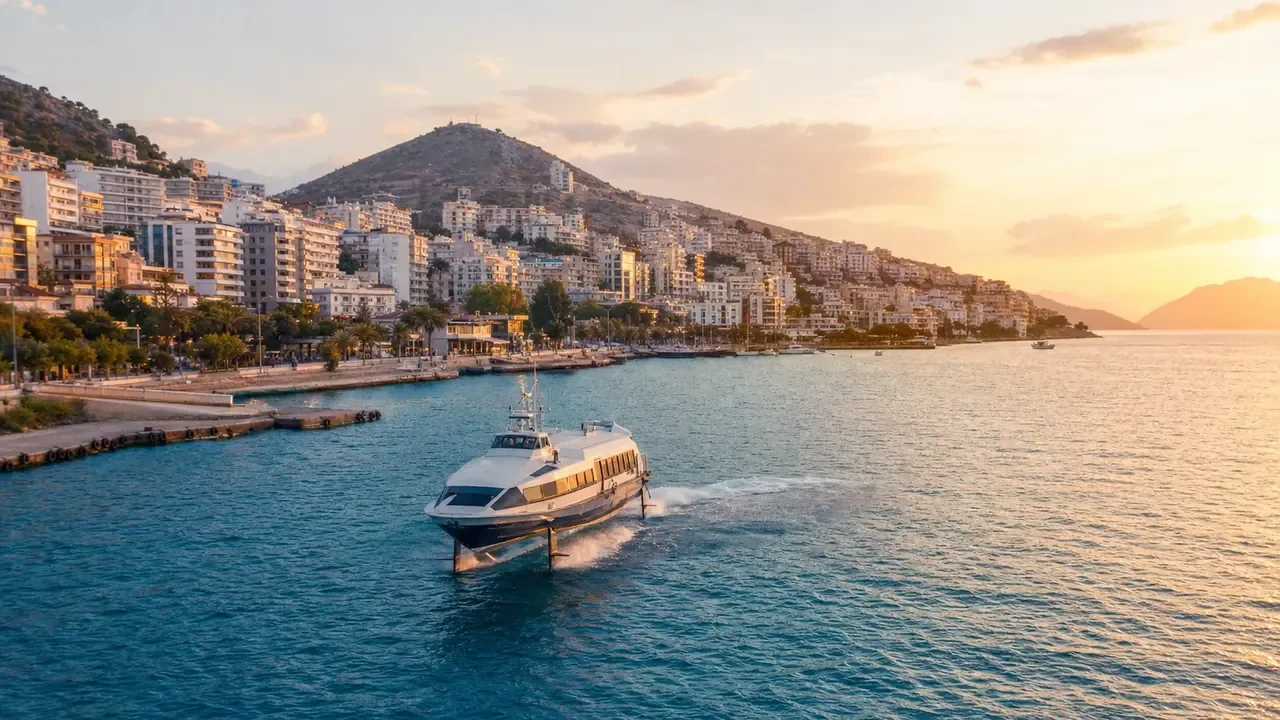
Return the rental car in Sarandë and take the ferry across to Corfu.
This is one of the reasons I like ending the trip in southern Albania rather than driving all the way back north to Tirana. You keep moving in one direction and finish with an incredibly easy international connection.
Fast boats between Sarandë and Corfu can make the crossing in roughly 30 minutes, while the conventional ferries take around 75 minutes; schedules vary considerably by season.
One-way rental logistics also need to be arranged in advance, but major rental companies currently have stations in both Tirana and at Sarandë Port and permit domestic one-way rentals, generally with an additional fee for longer distances.
If the Corfu flight departs later in the day, you may be able to ferry across that morning. If it is an early flight — or an important long-haul connection — I would move to Corfu the previous afternoon and spend the final night there. I would much rather enjoy one last Greek dinner than spend the end of the trip worrying about whether a ferry will connect perfectly with an international flight.
What I Would Add and What I Would Skip
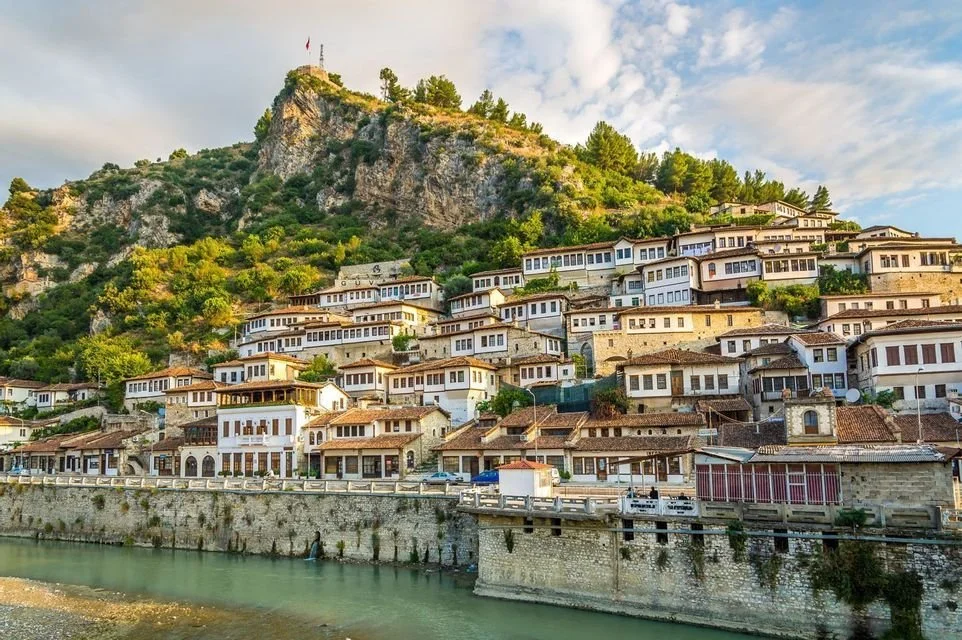
Berat: I love the idea of including Berat for travelers who want more history and less beach time, but I would add it as an overnight between Tirana and the Riviera rather than forcing it into an already busy driving day. I would trade one of the coastal nights for it.
Gjirokastër: Another worthwhile inland detour, particularly if architecture and history are priorities. Again, I would give it a night rather than turn it into a rushed roadside stop.
The southern Blue Eye: Beautiful, but optional for me. If you go, make it an experience rather than a photo stop.
Lake Shkodër: This is one of the easiest additions I would make to the northern portion of the trip. Kayaking or paddleboarding at the beginning or end of the Alps loop gives you something active without adding another strenuous hiking day.
The Blue Eye of Theth: I would prioritize this one over the southern Blue Eye, particularly if you already have two nights in Theth. It feels much more integrated into the mountain experience.
My Biggest Takeaways
Albania is still a destination where I think how you travel matters more than how many boxes you check. It rewards a little flexibility, a sense of humor and a willingness to accept that things do not always operate with the same structure you may be used to elsewhere in Europe.
One of the biggest practical things to know is that cash is still king. I always keep Albanian lek on me, along with some euros as backup, and I never assume that a restaurant, beach club, taxi or small hotel will take a credit card just because it looks polished. Card acceptance is improving in larger hotels and businesses, but Albania remains noticeably cash-heavy, particularly once you get outside Tirana.
The tourism infrastructure is also still catching up with the country's popularity. That is part of the charm, but it can require some patience. A bus transfer might involve standing somewhere that does not particularly look like a bus stop, asking three different people where you should be, putting your luggage into an unmarked van and wondering briefly whether you have misunderstood the entire situation. Then somehow, twenty minutes later, everyone is on board, the luggage is loaded, you are headed in the right direction and it all works out. I have learned that Albania often operates with a little more organized chaos than I am accustomed to, especially when it comes to local transportation — and other travelers report much the same thing.
That is one of the reasons I like using arranged transfers for certain portions of a client itinerary and a rental car for the Riviera. You absolutely can travel Albania by bus and furgon, but if you only have two weeks, I would rather spend your time exploring than trying to decode an informal transportation system.
At the same time, some of my favorite experiences here have come from exactly that lack of polish. Albania still has moments where travel feels pleasantly unscripted. I've sat beside freezing mountain water on a scorching summer day, pulled over simply because a village looked interesting, eaten incredibly well in places I never would have found by planning every meal in advance, and watched the landscape change completely within the space of a few hours.
I've also found Albanians to be incredibly friendly and willing to help. There have been plenty of situations where my Albanian was nonexistent, someone's English was limited, and between pointing, Google Translate and a lot of gesturing, we figured it out. People have helped me find transportation, given directions, explained how something works or simply made sure I ended up where I was trying to go.
And as a woman who has spent a significant amount of time here on my own, I have personally felt very safe traveling solo in Albania. That doesn't mean I abandon normal travel precautions — I pay attention to my surroundings, especially at night, and I use the same judgment I would anywhere else — but I have never felt that being a woman traveling alone should be a reason not to come here. Other recent solo female travelers describe similarly positive experiences, although, as anywhere, individual experiences vary.
Albania is changing incredibly quickly. Places that felt sleepy only a few years ago now have boutique hotels, elaborate beach clubs and travelers arriving from all over the world. In some ways that makes travel easier; in others, it makes me even more inclined to seek out the smaller villages, family-run properties and places that haven't yet been polished into something designed primarily for tourists.
So my advice is not to try to “do Albania” by racing from one famous Instagram location to another. Leave room for the slightly chaotic transfer. Stop at the roadside restaurant. Stay an extra hour at the beach you weren't planning to visit. Accept that Google Maps may not always have the answer. Carry cash. Ask people for help.
And if there is one piece of advice I will repeat after doing it myself: do not underestimate the Valbonë–Theth hike.
The Riviera feels even better afterward.